I'm a bilingual yoga teacher who helps people who sit a lot gain mobility, move without pain and reduce their stress.
Your brain is lying to you about how tired you are
|
I want to talk about fatigue today. It's something we all experience, yet we don't fully understand it. Even from a scientific standpoint, there's still a lot of ongoing research and competing theories. Here's one that recently blew my mind. The widespread belief is that we become physically tired when we reach our muscular limits. The muscles run out of oxygen, or start to suffer damage from the build-up of waste products like lactic acid (if you have ever held a Warrior 2 for over one minute, you know what I'm talking about). But a scientist called Tim Noakes has a different theory which is gaining a lot of traction, particularly among psychologists. His idea is that it's not your muscles that dictate your fatigue. It's your brain. Your brain essentially creates a buffer. It sends you the signal to stop well before you've actually reached your limits. And it does this to protect you, because it knows you'll need those muscles for something else afterwards. If you think about it from an evolutionary perspective, it makes a lot of sense. Go back to the time we had to hunt our food. Our brains didn't allow us to use all of our muscle capacity for the hunting part, because we still needed to carry our loot back to camp. And you've probably noticed this yourself. Even when your legs are completely shaking after a tough workout, and you feel like you've given 100% effort... you can still walk home from the gym. So your brain is making a fairly conservative estimate of the energy you can spend, based on a whole range of variables: the oxygen levels in the air, how confident you feel, how long and intense the task is, your emotional state, etc. It's constantly reassessing, too. When we see an athlete getting a second wind in the last stretch of a long run, that's their brain allowing a bit of this stored energy to come to the rescue! I wanted to share that with you because I find this liberating. Because it means that most of the time, we have more in the tank than our brain is letting on. As Noakes puts it: "You do not have to believe everything you think and feel." Something to sit with this week 🌱 Clem |
Clémence Dieryck
I'm a bilingual yoga teacher who helps people who sit a lot gain mobility, move without pain and reduce their stress.

When someone gets a herniated/slipped disc diagnosis, the instinct is almost always to stop moving, be careful and wait for it to pass. I get it, the last thing we want is to make it worse. But it's also exactly what we shouldn't do. When the balance in a region of the spine is disrupted, the surrounding muscles compensate. They have to work harder, so they fatigue and become irritated. But also, your nervous system is on high alert. The whole area has become flagged as a threat. And if we...
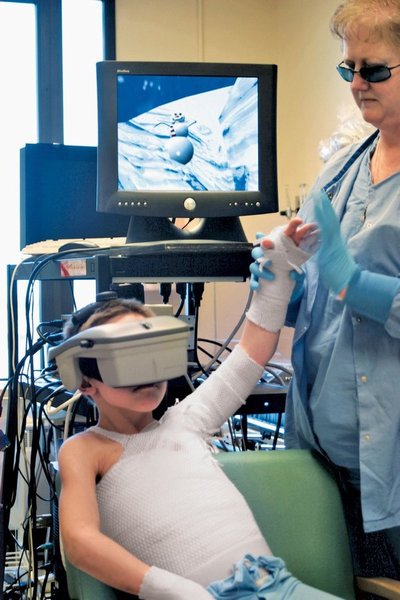
A few weeks ago, I talked about persistent pain that doesn't seem to have a clear explanation. The tests that show nothing, the doctors who sound increasingly skeptical... and us, wondering if we are not getting mad? There's something else I'd like you to know about that. We now know that pain isn't a direct readout of damage in our body, but a decision our brain makes. Your brain is constantly gathering information. The state of your tissues, yes, but also your emotional state, your sense of...

I was recently asked this very astute question. Why astute? Because the answer is fairly counter-intuitive, which allows me to dispell a very common myth. The short answer is: not really... It's necessary to stretch to become more flexible, but in order to see real progress, it's a little more complicated than that. And that's because flexibility isn't primarily a muscle issue, but a nervous system issue. "Again with her bloody nervous system??" Hey! Don't shoot the messenger! According to a...